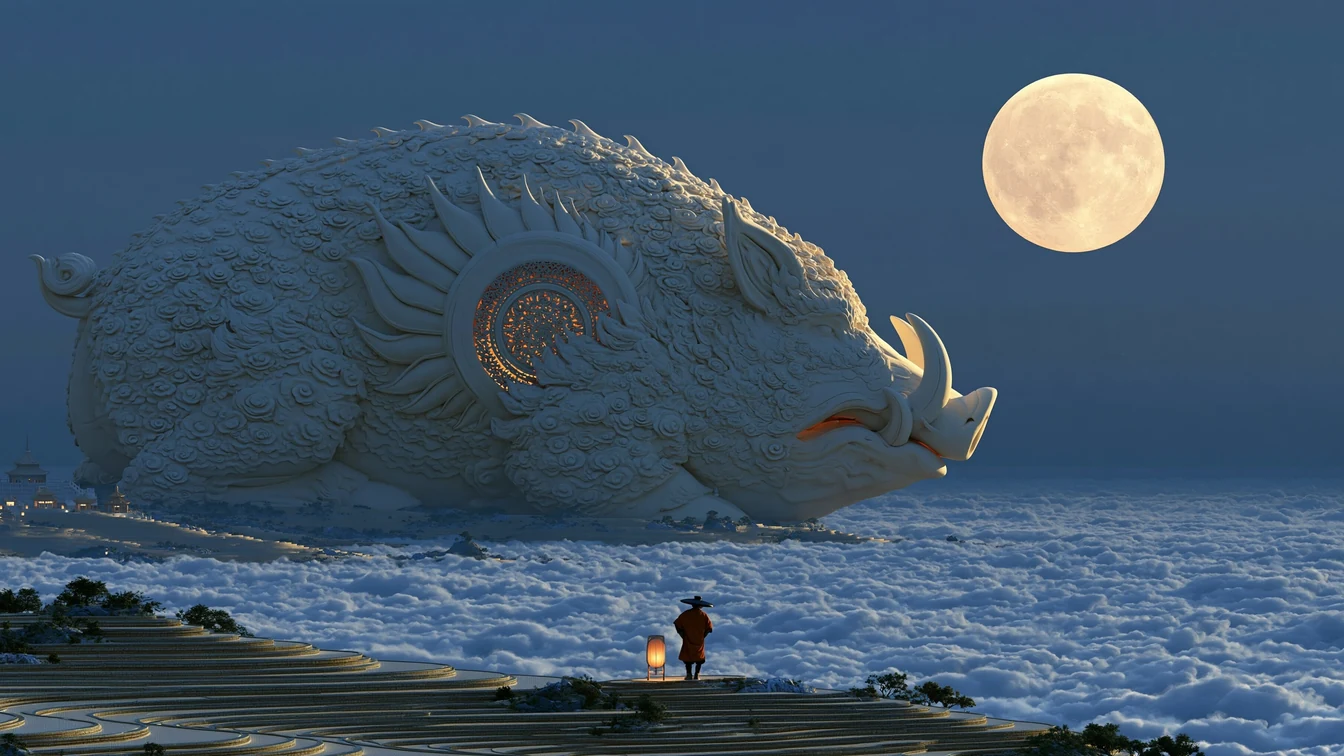
No. 12 · Chinese zodiac Pig · 猪 · Hài
The Last Hour of the Day
Chinese zodiac Pig (猪) — it finished twelfth because it stopped to eat and then fell asleep. The only animal in the zodiac the tradition describes as genuinely content.
亥时 is the last hour of the Chinese day, nine to eleven at night. The work is finished, the fire is banked, the last conversation is winding down. It is the hour of the household at rest — and it belongs to the animal that Chinese rural life was, for most of history, built around. The pig in the yard was the family’s savings, its insurance, and its winter.
The Specimen
- Earthly branch
- 亥 Hài
- Hours
- 21:00 – 23:00
- Element
- Yin Water
- Direction
- North-northwest
- Season
- Early winter
- Zodiac position
- Twelfth of twelve
Section 01The Twelfth Hour
亥时 closes the cycle. It runs from nine to eleven at night, after which the day begins again at 子时 with the Rat. 亥 is the twelfth earthly branch and the first month of winter — the point at which the year has finished its work and the world turns inward.
There is a structural symmetry here that the tradition clearly intends. The first hour belongs to the Rat, the smallest and cleverest animal; the last belongs to the Pig, the largest and most straightforward. The cycle opens with cunning and closes with contentment, and then starts again.
Section 02Yin Water
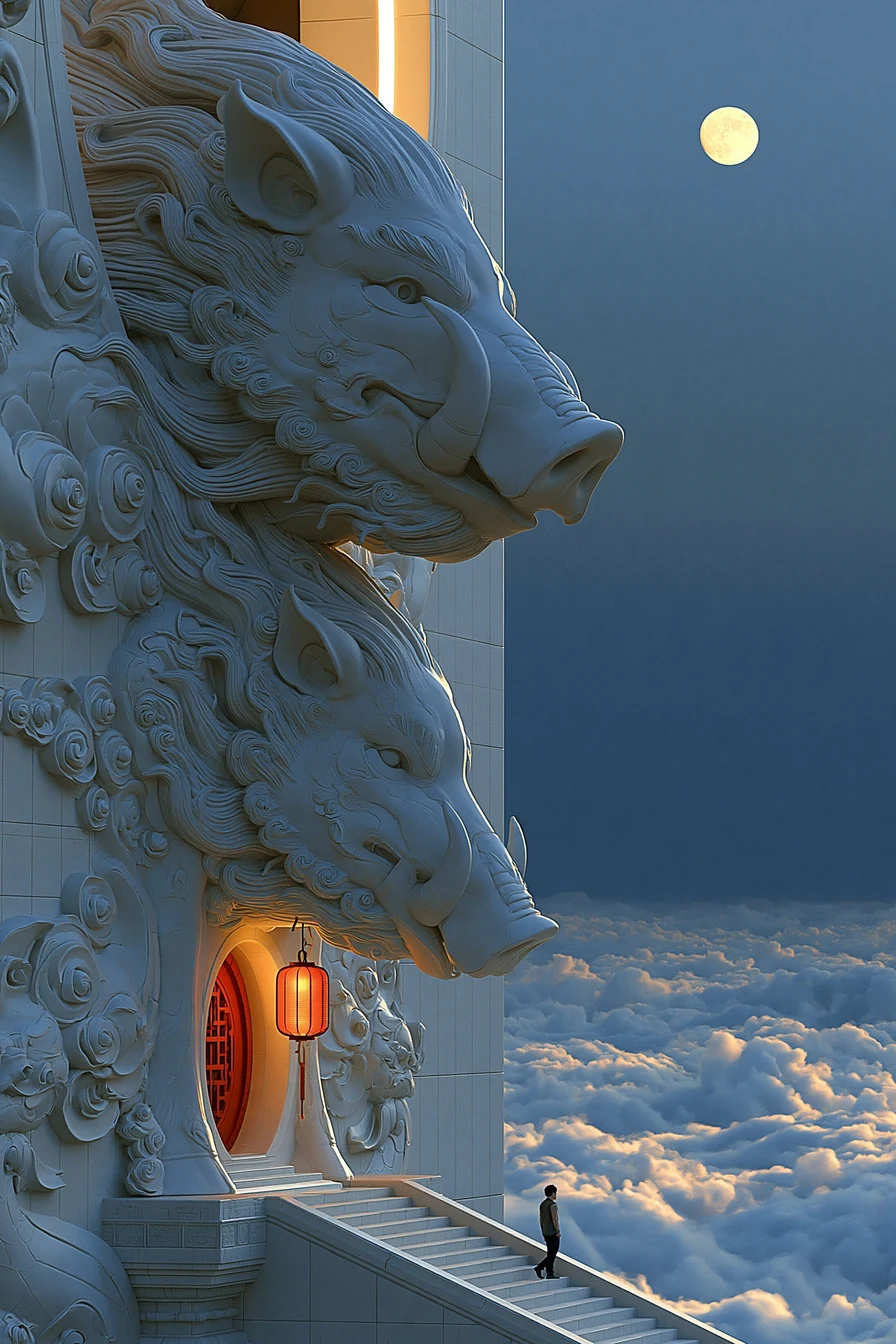
The Pig carries yin water — the same element as the Rat, in its receptive form. Water is the element of depth, of return, of the thing that settles to the bottom. Yin water is the pool rather than the current: still, generous, reflective, and difficult to disturb.
Pig people are described as warm, honest, generous and unusually good at enjoying things. They are the sign most associated with hospitality, with appetite in the broadest sense, and with a genuine capacity for happiness that other signs find slightly suspicious. A Pig is usually the person who makes a gathering work, not by organising it but by being obviously glad to be there.
The tradition’s criticisms are consistent and gentle. Pigs are naive, and they are gullible in a specific way: they assume other people are operating in good faith because they are. They can be indulgent, particularly with food and money. And they are not good at seeing danger coming, because it has never occurred to them to look.
Section 03Twelfth, and Not Bothered
The Pig’s race story is the least dignified and, in most tellings, the most affectionately told. The Pig set off well. Then it got hungry and stopped to eat. Then it got sleepy and lay down for what was meant to be a short rest. By the time it woke and ambled across the finish line, the other eleven were already there and the race was over.
The tradition does not present this as a failure. It presents it as a character. The Pig is not lazy in the way a Western reader might assume; the Pig is simply not motivated by the same things. It was not racing to win. It was having lunch and then a nap on a pleasant afternoon, and the fact that this cost it eleventh place is, from the Pig’s point of view, not obviously a loss.
This is a genuinely unusual position for a zodiac to take. Almost every animal in the twelve is defined by how it handled the competition. The Pig is defined by not having entered it.
Almost every animal in the twelve is defined by how it handled the competition. The Pig is defined by not having entered it.
The Twelve · I Ching
Section 04The Pig in the World
The pig is the animal that made settled Chinese life possible. It is the most efficient converter of household waste into protein in the pre-industrial world, it requires no grazing land, and it can be kept in a yard. The character 家 — home, family — is a pig (豕) under a roof (宀). That is not a metaphor. To a farming household, a house with a pig under it was what the word meant.
The pig is also, in the Chinese zodiac, one of the four animals the tradition associates with wealth — not the ostentatious wealth of the Dragon but the real, stored, edible kind. Pig-shaped coin banks and pig-shaped ornaments are standard New Year gifts. The animal is fat because the household is doing well, and the household is doing well because the animal is fat. It is a circularity the tradition finds entirely satisfactory.
In Buddhist iconography the pig has a harder role: it appears as one of the Three Poisons, representing 痴 (chī) — delusion, the inability to see things as they are. It sits at the centre of the Wheel of Life alongside the rooster and the snake. The reading is not that pigs are stupid; it is that comfort can make anyone stop looking. Given the Pig’s race story, the tradition is being unusually pointed.
Section 05Reading the Pig
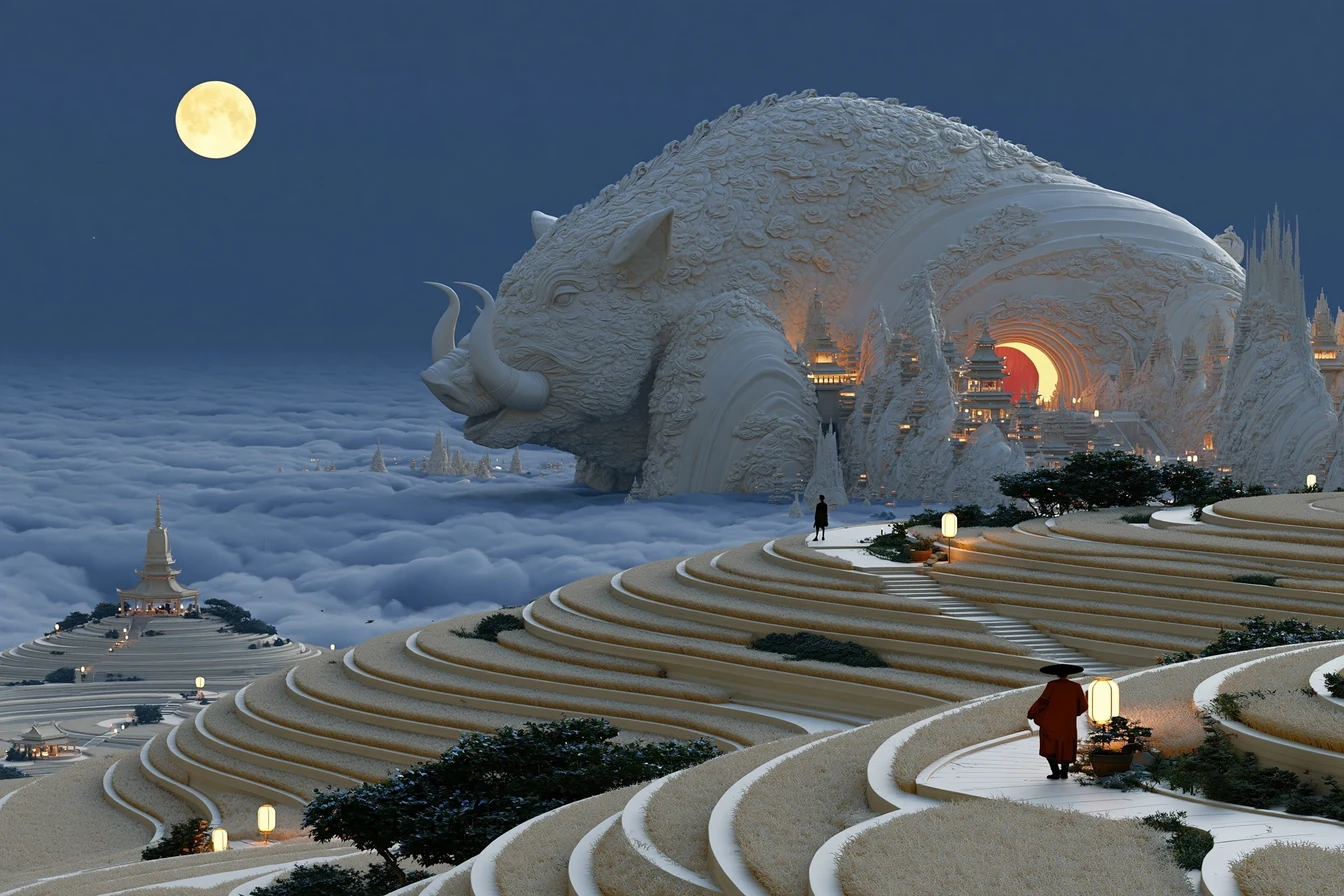
The compatibility tables pair the Pig with the Rabbit and the Goat — three signs that prefer harmony — and with the Tiger, whose decisiveness gives a Pig the one thing it does not have. The difficult pairing is the Snake, whose privacy and calculation are the exact inverse of everything the Pig is.
The tradition’s advice to the Pig is the only piece of counsel in the cycle that is not really a correction. It is a warning, and it is addressed to the Pig’s friends as much as to the Pig. The Pig is the sign the tradition trusts the most and protects the least. Everybody likes the Pig. That is precisely the problem.
Section 06The Sixty-Year Round
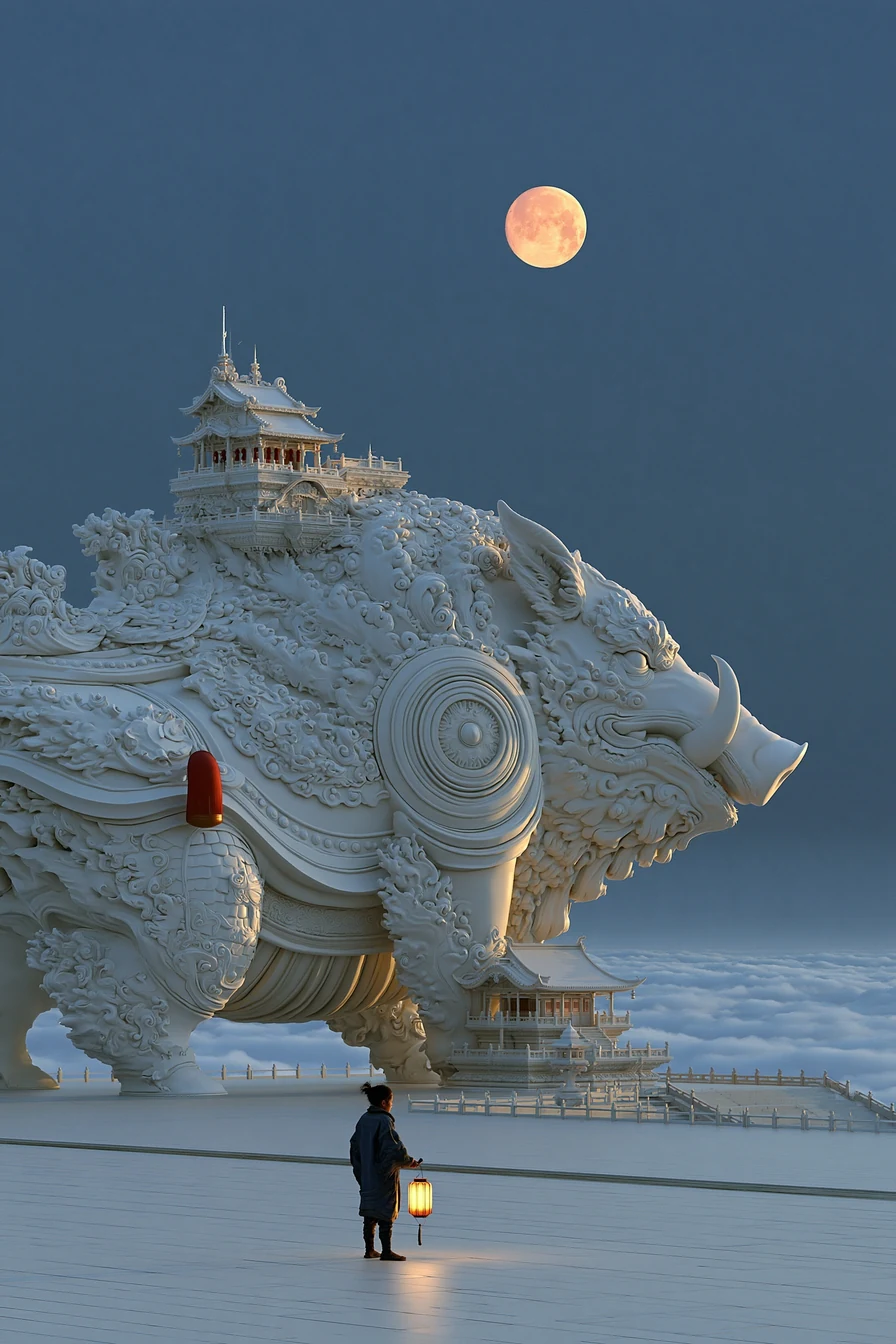
The twelve animals cycle against ten heavenly stems, and the stems run in pairs through the five elements. The full round is therefore sixty years, and every animal appears in it five times. The Pig’s five forms:
Wood Pig (1935, 1995) — the most generous and the most idealistic; the Pig most likely to give away more than it should. Fire Pig (1947, 2007) — the most sociable and the most energetic; appetite in its most extroverted form. Earth Pig (1959, 2019) — the steadiest and the most dependable; the one most likely to be the person everyone else’s household quietly relies on. Metal Pig (1971, 2031) — the most disciplined and the most capable; a Pig that got organised, which the tradition regards as one of the more formidable combinations in the cycle. Water Pig (1983, 2043) — the most sensitive and the most reflective; the deepest of the five, and the one most likely to be underestimated.
The Pig is defined by openness, so the element decides what the openness is spent on — people, work, art, or simply on being happy, which the tradition does not consider the least of these.
Section 07The Year of the Pig
A Pig year returns every twelve years. The tradition reads it as a year of ease and accumulation — good for harvests, for family matters, for settling in, and generally for the things that make a life comfortable rather than remarkable.
本命年, for a Pig, is the return of its own sign at twelve, twenty-four, thirty-six. The year god 太岁 passes directly overhead and the customary protection is red — a belt, a cord, underclothes — given by an older relative before the new year.
This is the one sign for which the custom is almost unnecessary, because the Pig is already the animal most likely to be surrounded by people who want to look after it. The tradition’s warning about the Pig is not that it will be forgotten. It is the reverse. Everybody likes the Pig. That is precisely the problem — the Pig is the sign the tradition trusts the most and protects the least, and a 本命年 is the one annual moment when that asymmetry is officially acknowledged.
The advice the tradition gives a Pig in its own year is less advice than a statement of fact. The Pig is not racing. It never was. The eleven animals that finished ahead of it did so on an afternoon when the Pig was having lunch and then a nap, and from the Pig’s point of view that was not obviously a loss. The tradition has spent two thousand years deciding whether it agrees.