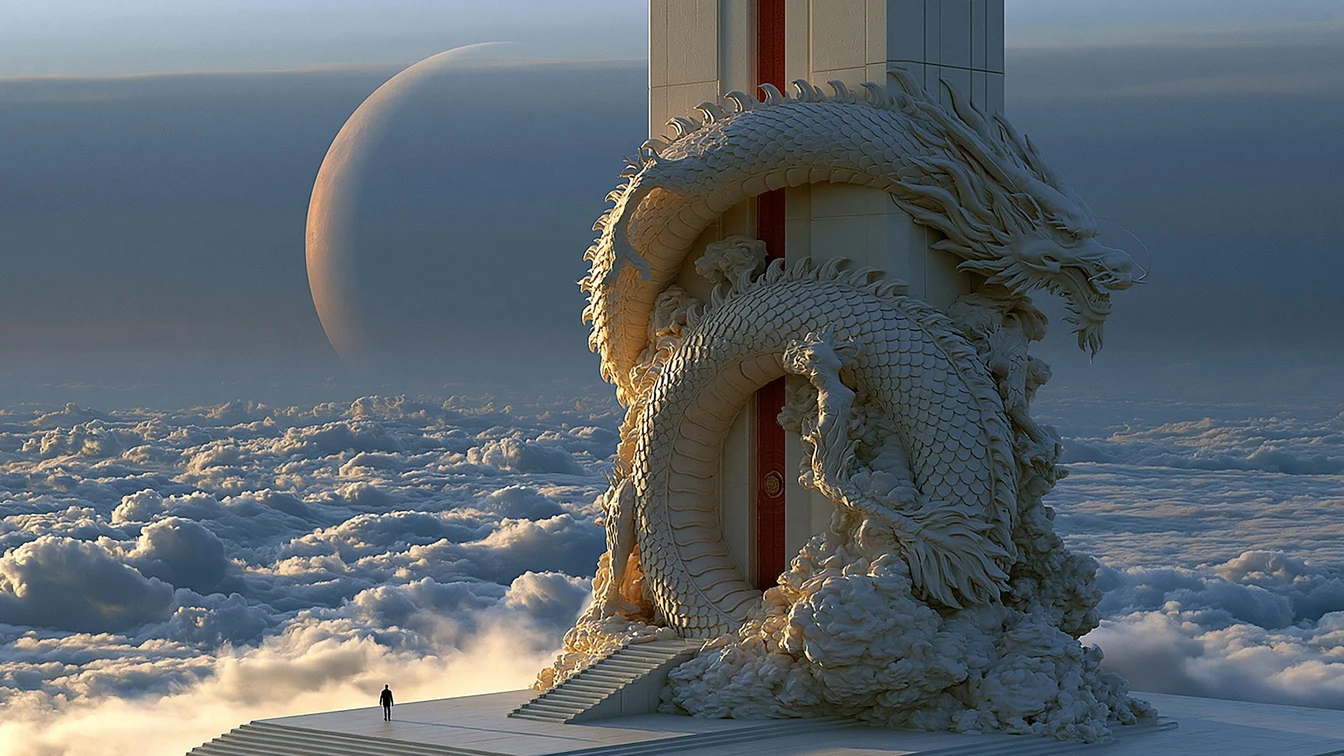
No. 05 · Chinese zodiac Dragon · 龙 · Chén
The Dragon Who Was Late
Chinese zodiac Dragon (龙) — the most powerful animal in the zodiac did not win the race. It stopped, twice, to do something useful, and the tradition has never treated that as a mistake.
辰时 is the hour when the mist is still in the valleys but the sun has already risen above it — the hour of 龙, when the clouds are still low enough to be mistaken for something alive. In Chinese weather-lore this was the hour when dragons were said to be moving between the water and the sky. It is the fifth of the twelve hours and the third of the spring months: the moment the season is at its fullest, and the moment it begins, invisibly, to end.
The Specimen
- Earthly branch
- 辰 Chén
- Hours
- 07:00 – 09:00
- Element
- Yang Earth
- Direction
- East-southeast
- Season
- Late spring
- Zodiac position
- Fifth of twelve
Section 01The Fifth Hour
辰时 runs from seven to nine in the morning. The night’s damp is lifting, the light is coming in at a low angle, and on a wet spring morning the hills genuinely do look as though something enormous has just passed through them. The pairing of the dragon with this hour is the most atmospheric of the twelve — it is not based on an animal’s habits, because there is no animal, but on a quality of the weather.
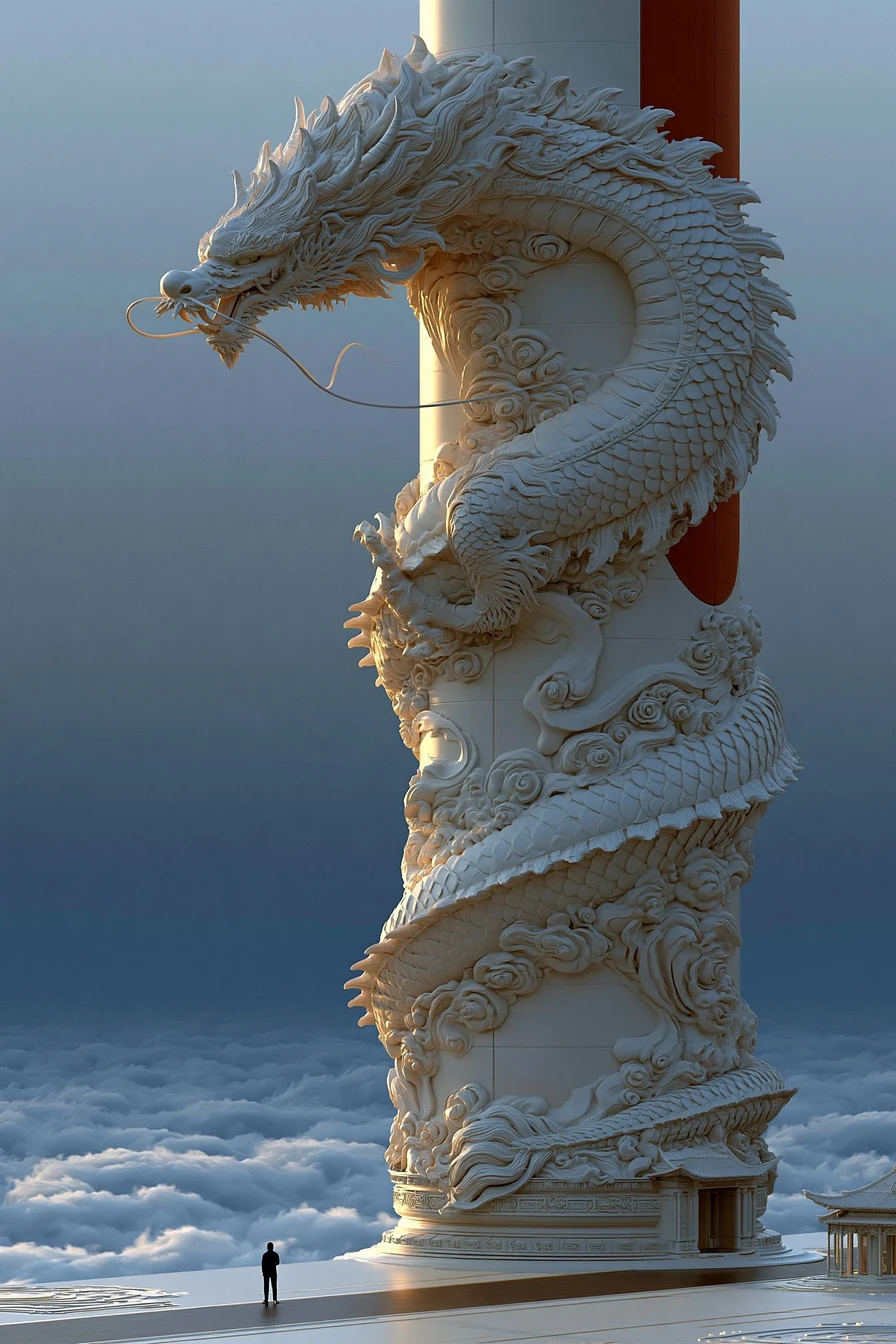
The Chinese dragon is not the European dragon. It has no wings, breathes no fire in the Western sense, and is not a symbol of evil. 龙 is a rain deity, a river spirit, an emblem of the emperor, and — in the oldest readings — the principle of yang itself moving through the world. It is composed of parts of nine different animals, it lives in water and flies, and it is fundamentally benevolent. A Chinese dragon is the thing you pray to in a drought.
Section 02Yang Earth
In the five-element scheme the Dragon carries yang earth — which surprises people who expect a fire sign. Earth is the element of the centre, of stability and of the ground beneath everything. Yang earth is earth at its most monumental: the mountain, the plateau, the raised tomb. The Dragon is not the zodiac’s flame; it is the zodiac’s foundation, wearing the face of something that flies.
Dragon people are described in the tables as ambitious, charismatic and lucky — the last of which is a genuine category in Chinese astrology, not a throwaway. Dragons are the sign most often credited with 贵人 (guì rén), the helpful person who appears at the right moment; the tradition holds that Dragons attract assistance in a way that other signs simply do not. They are also, not coincidentally, the sign most likely to be told they are special from a very early age.
That is the beginning of the trouble. Dragons are frequently impatient, frequently arrogant, and frequently convinced that a rule which applies to everyone else does not apply to them. The tradition does not present this as a flaw so much as a structural risk: a Dragon who is right about their own importance becomes insufferable, and a Dragon who is wrong about it becomes dangerous.
Section 03Why the Dragon Came Fifth
The race explains the placement. The Dragon, on paper, should have won. It can fly; the other eleven cannot. And yet it arrived fifth, behind a rat, an ox, a tiger and a rabbit.
The most widely told version gives two reasons. First, the Dragon had stopped to make rain for a drought-stricken village — an act of public duty that cost it the lead. Second, on its way it came across the Rabbit struggling in the water and stopped again, blowing a breath of wind that pushed the Rabbit’s log raft to the far shore. By the time it reached the finish line, four animals were already there.
This is one of the most revealing passages in the whole cycle. The story does not say the Dragon was outsmarted, or slow, or careless. It says the Dragon had more important things to do. In a culture where the emperor himself was 真龙天子, the Son of Heaven, the tale quietly makes the point that the dragon’s job is not to win races. It is to bring the rain.
The Dragon could fly. It arrived fifth because it had stopped to make rain for a village that would never know its name.
The Twelve · I Ching
Section 04The Dragon in the World
The dragon’s role in Chinese public life is hard to overstate. The imperial throne was the dragon throne; the emperor’s robes were embroidered with five-clawed dragons; the flag of the Qing dynasty was a dragon. The association runs so deep that the Chinese word for the animal — 龙 — became a shorthand for the nation itself: 龙的传人, “descendants of the dragon”, is how a great many Chinese people describe themselves.
The dragon also governs water in the most practical sense. Rain gods, well spirits, river deities and the sea kings are all dragons or dragon courts. The Dragon Boat Festival, held on the fifth day of the fifth lunar month, is the most visible survival of that — boats carved as dragons, raced on rivers, in a rite that began as an appeal for rain and protection from disease.
And the dragon is the head of the four celestial creatures: 左青龙,右白虎, the Azure Dragon of the east and the White Tiger of the west, with the Vermilion Bird of the south and the Black Tortoise of the north completing the set. Those four are not decoration. They are a map of the sky, a system of directions, seasons and elements, and the whole of Chinese astronomy before telescopes.
Section 05Reading the Dragon
The compatibility tables put the Dragon with the Rat and the Monkey — the zodiac’s “first triangle”, three signs that all think in strategy — and with the Rooster. The difficult pairing is the Dog, whose blunt sense of fairness has an uncomfortable way of being correct.
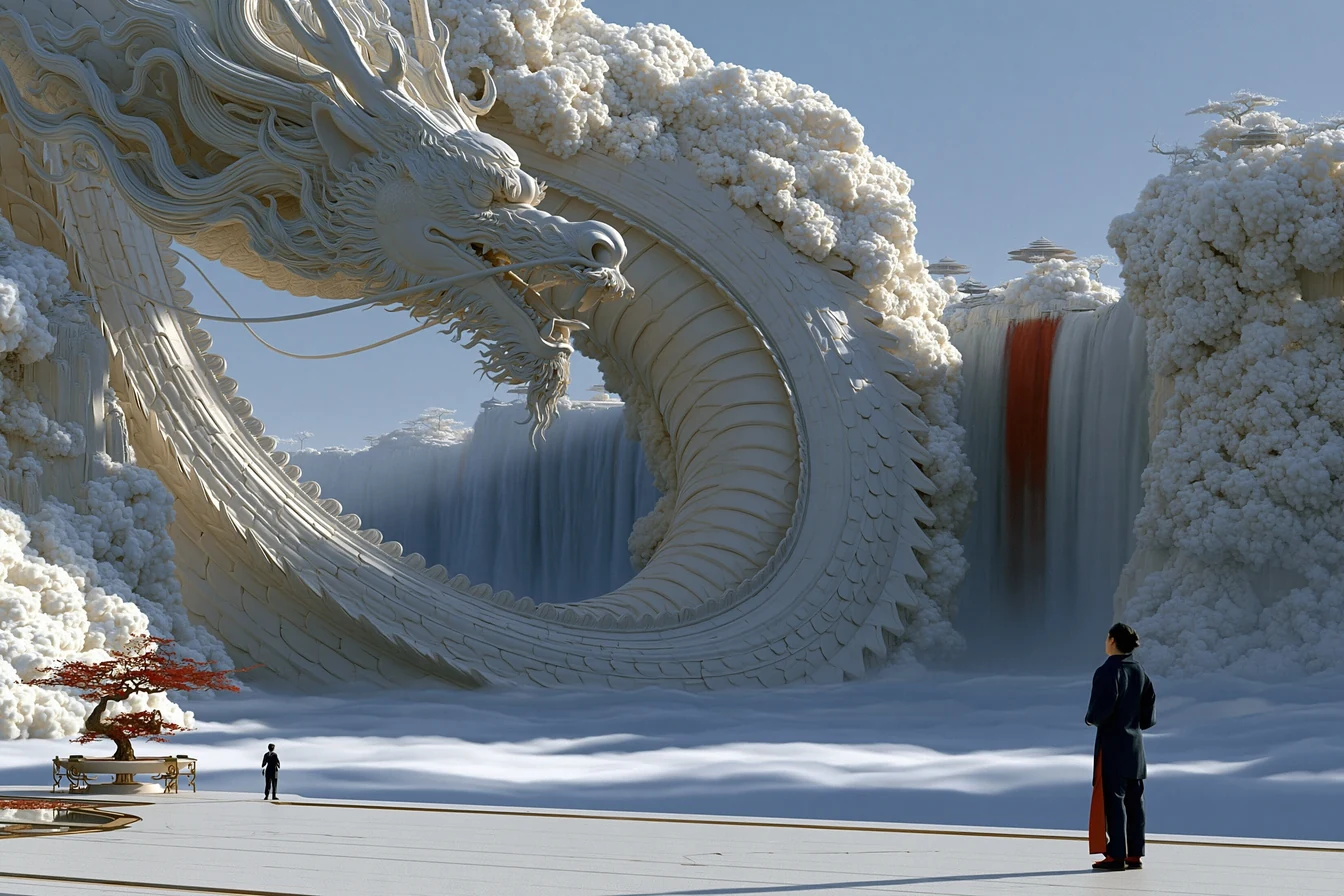
The tradition’s advice to the Dragon is unusual, because it is not a correction. It is a reminder of why the Dragon came fifth. The rain was more useful than the trophy. A Dragon that forgets this becomes merely proud; a Dragon that remembers it is the reason the harvest happens.
Section 06The Sixty-Year Round
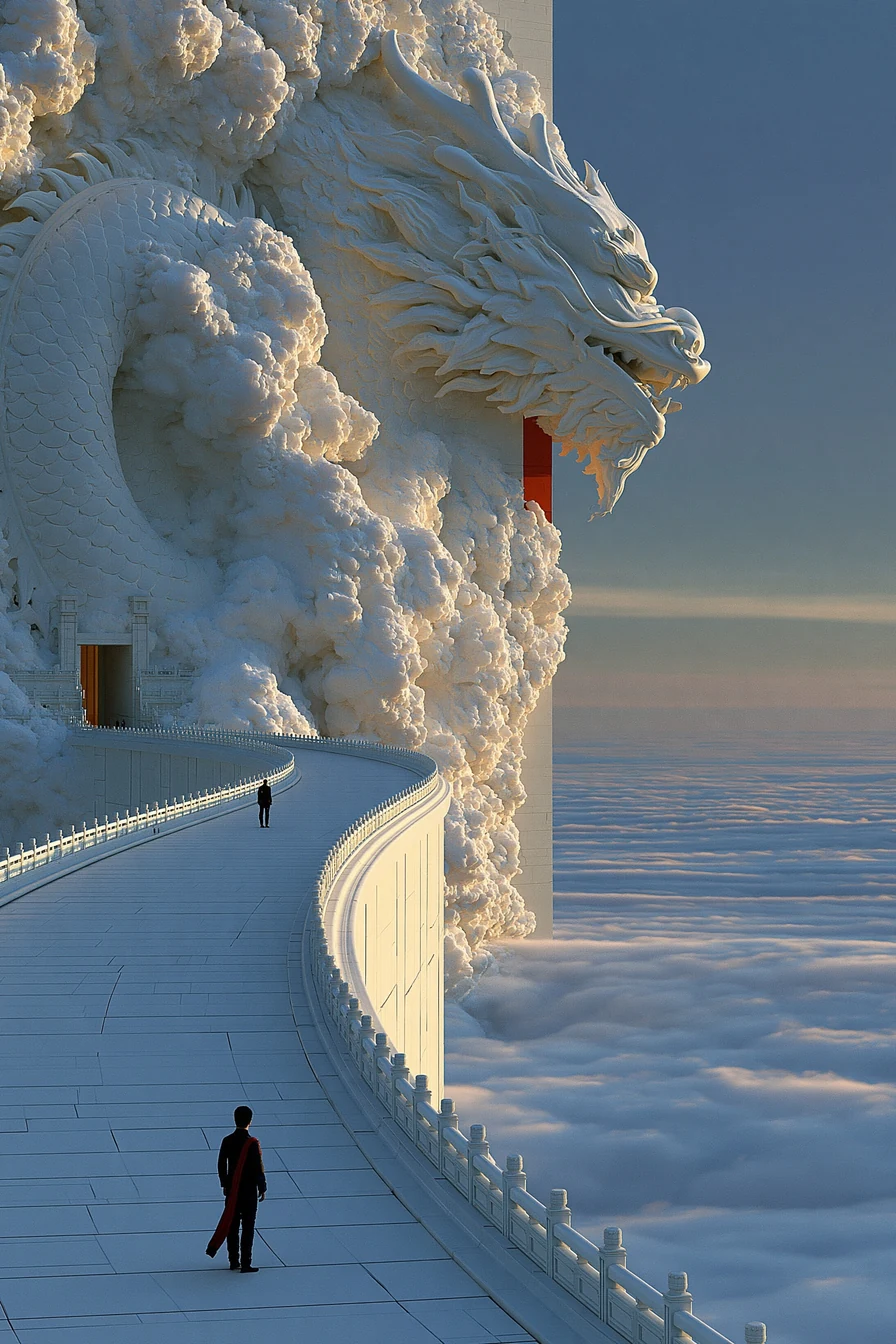
The zodiac’s twelve animals run against ten heavenly stems, and the stems cycle in pairs through the five elements. That makes the full round sixty years, with each animal appearing five times — once per element. The Dragon’s five forms:
Earth Dragon (1928, 1988) — the most grounded and the most constructive; the Dragon that actually finishes what it starts. Metal Dragon (1940, 2000) — the most formidable and the most rigid; enormous capability with very little patience for anyone who cannot keep up. Water Dragon (1952, 2012) — the most intuitive and the most adaptable; a Dragon that leads by understanding rather than by decree. Wood Dragon (1964, 2024) — the most creative and the most idealistic; the artist and the reformer of the five. Fire Dragon (1976, 2036) — the most spectacular and the most volatile; the one most likely to be remembered and least likely to be easy to work with.
This is a considerable spread. The Dragon is already the sign most likely to be told it is exceptional from an early age; which element it was born under decides what it does with that information.
Section 07The Year of the Dragon
A Dragon year comes once every twelve and is, in the popular reading, the most anticipated in the cycle. The tradition associates it with ambition, visibility and large public events, and it is historically the year with the highest birth rates in Chinese-speaking communities — a fact that has repeated itself for decades and is entirely rational, given what the sign is believed to confer.
本命年, for a Dragon, is the return of its own sign at twelve, twenty-four, thirty-six. The year god 太岁 is understood to be directly overhead, and the conventional protection is red — a belt, a cord, underclothes — given by an older relative before the new year begins.
The custom lands on the Dragon differently than on any other sign, because the Dragon is the one animal in the twelve that the tradition treats as semi-divine. Being asked to accept a gift of protection from a grandparent is, for a Dragon, a small and useful humiliation: a reminder that the year is bigger than the person in it, and that even the animal which governs the rain spends most of its time waiting for the right clouds.
The advice the tradition gives a Dragon in its own year is the same advice the race story gives it. The rain was more useful than the trophy. A Dragon that has understood this is the reason the harvest happens. A Dragon that has not is simply loud.