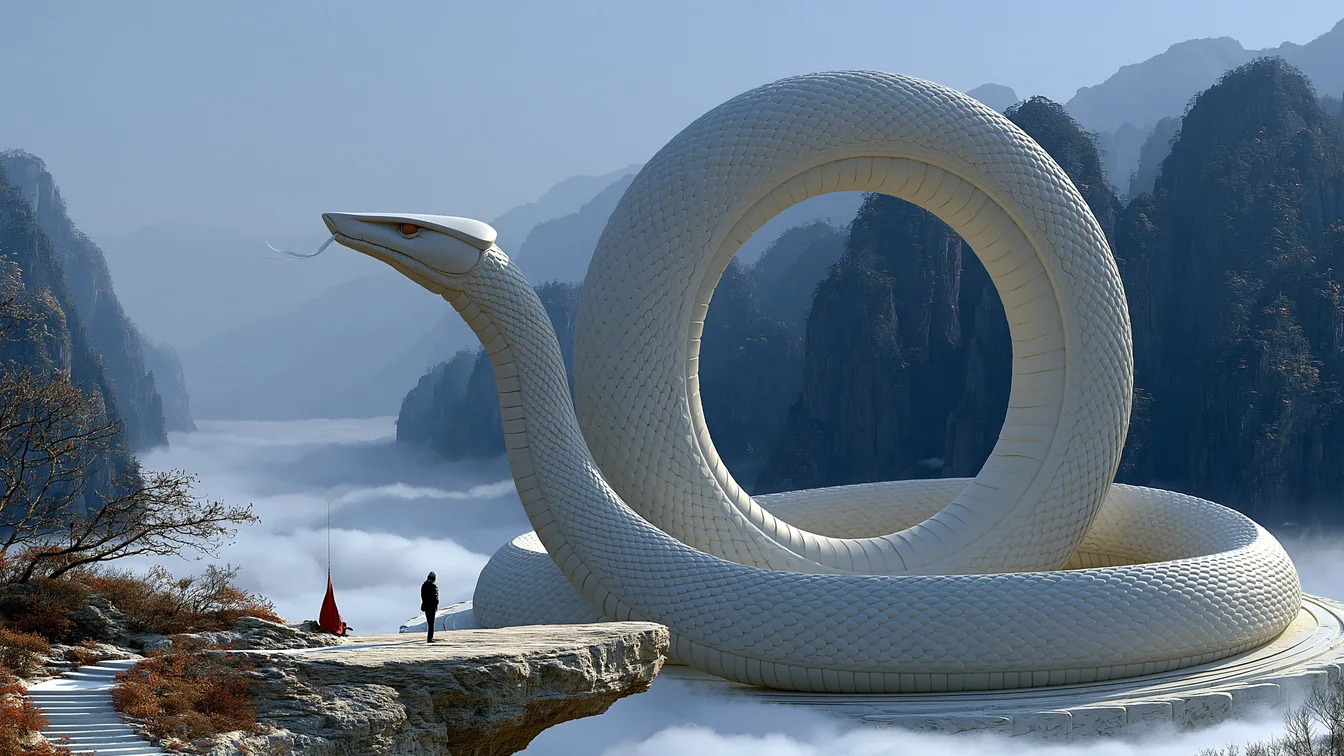
No. 06 · Chinese zodiac Snake · 蛇 · Sì
The Snake in the Grass
Chinese zodiac Snake (蛇) — it arrived sixth by holding on. The most private sign of the twelve is also its most misunderstood, and the tradition knows exactly why.
巳时 runs from nine to eleven in the morning, when the sun has climbed and the dew is gone and the first real heat begins to move across the ground. It is the hour when snakes leave the shade to warm themselves — visible, briefly, before disappearing again. The sixth hour belongs to the animal that is most often present and least often seen.
The Specimen
- Earthly branch
- 巳 Sì
- Hours
- 09:00 – 11:00
- Element
- Yin Fire
- Direction
- South-southeast
- Season
- Early summer
- Zodiac position
- Sixth of twelve
Section 01The Sixth Hour
In the traditional pairing each animal is matched to a time when it is characteristic of itself. 巳时 is the hour of warming: the sun is high enough to matter, the ground has begun to hold heat, and cold-blooded creatures come out to take it. It is also the hour when the day’s real work begins — the morning’s freshness is over, and what is going to be done today is now being done.
巳 is the sixth earthly branch and the first month of summer. It sits at the point in the year when spring has definitively ended and the heat has not yet become oppressive — a narrow, bright, slightly charged interval. Everything about the Snake’s placement in the cycle suggests a creature that operates in narrow intervals and knows it.
Section 02Yin Fire
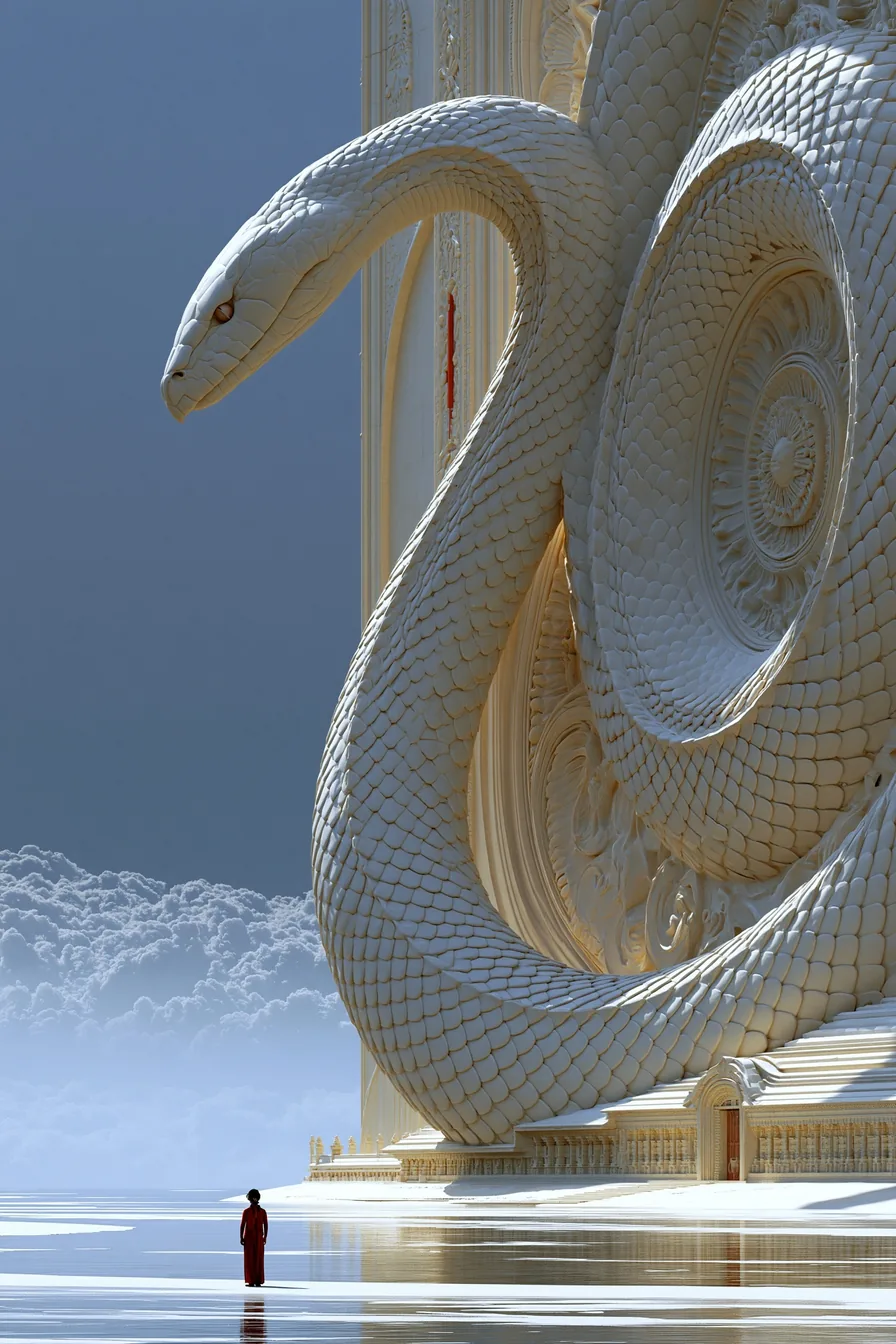
The Snake carries yin fire: the contained expression of the fire phase. Where the Horse is yang fire — the blaze, the gallop, the obvious — the Snake is fire held inside a cold body. It is the ember rather than the flame, and it is the single most distinctive thing about the sign.
Snake people are described as intuitive, elegant, private and unusually perceptive. They are the ones who notice what you did with your hands while you were talking. They are not gregarious and do not pretend to be; a Snake at a party is usually standing slightly to one side, watching, and will leave earlier than anyone expects. Their judgment is excellent and they keep it to themselves, which means it is often underestimated.
The shadow is a specific one, and the tradition names it more bluntly than it names almost any other sign’s. Snakes hold grudges. They are capable of a patience in resentment that other signs cannot sustain, and of a revenge that arrives years after the offence has been forgotten by everyone else. The same depth that makes a Snake perceptive makes it very difficult for a Snake to let something go.
Section 03Sixth, by Holding On
The race story for the Snake is the shortest and the strangest. In the most common version the Snake did not travel at all: it coiled itself around the Horse’s hoof and let the Horse carry it across the river. It was only near the far bank that the Horse noticed something on its leg, and reared — and the Snake dropped off, slid ahead, and took sixth place.
It is worth noticing what kind of victory this is. The Rat used a ride and a leap. The Snake used a ride and simply did not let go. Both are stories about the small defeating the large, but they are entirely different temperaments: the Rat is opportunism, the Snake is endurance. And the consequence is precise — the Snake placed sixth, immediately ahead of the Horse, and the two have been placed adjacent in the cycle ever since.
The Rat used a ride and a leap. The Snake used a ride and simply did not let go. Both beat the Horse.
The Twelve · I Ching
Section 04The Snake in the World
Chinese tradition has an unusually double-sided relationship with the snake. On the one hand it is one of the Five Noxious Creatures — 五毒, along with the scorpion, centipede, toad and spider — the animals whose images were printed on charms and hung in houses at the Dragon Boat Festival to ward off illness in the coming summer. The character 蛇 carries an overtone of danger.
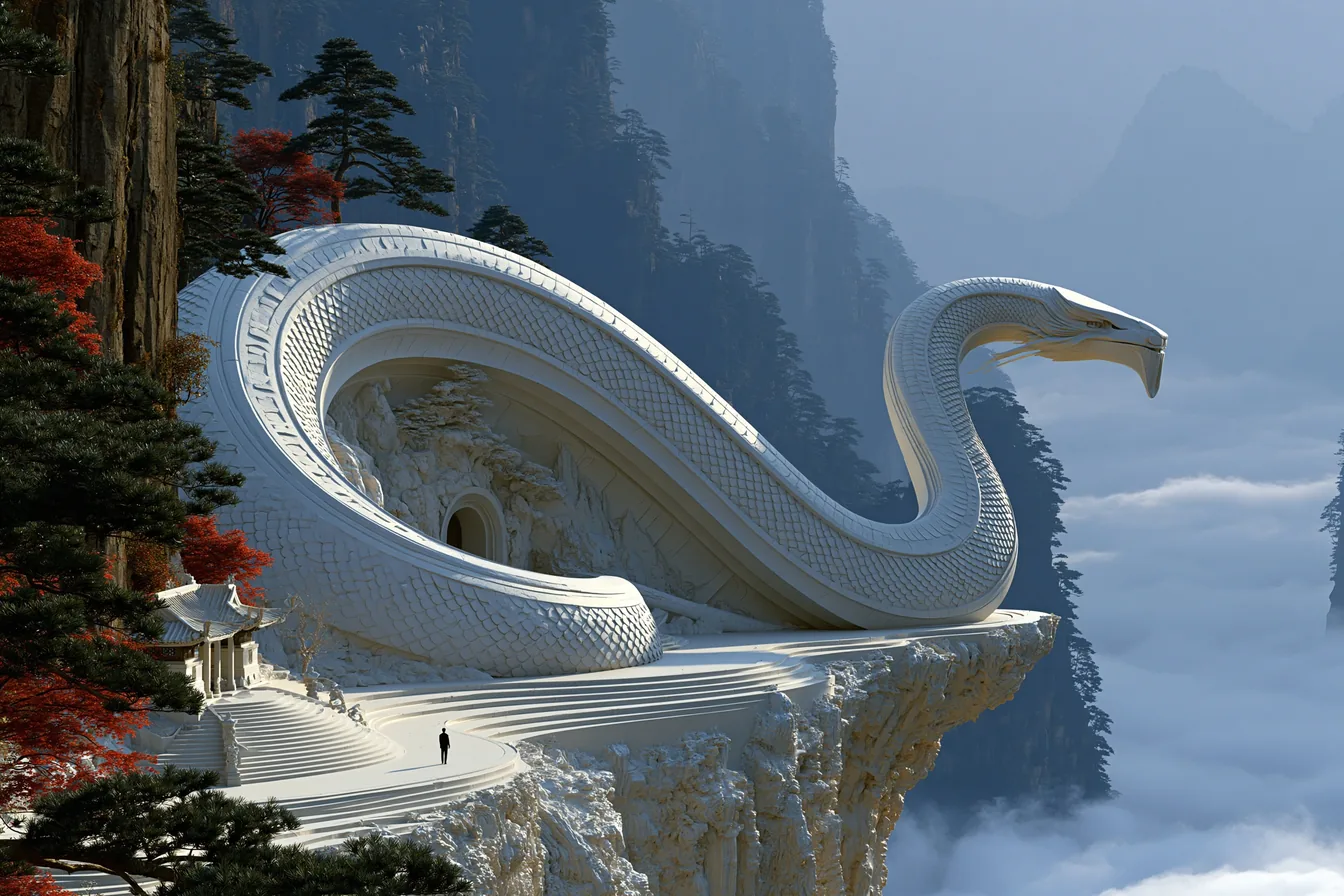
On the other hand the snake is a persistent symbol of transformation and of wisdom. It sheds its skin entirely and emerges renewed; in a tradition deeply concerned with cycles of renewal, that is not a small image. The most famous snake in Chinese literature is 白蛇, the White Snake, a spirit who takes the form of a woman, marries a mortal man and loves him with a fidelity that outlasts every attempt to destroy the marriage. The Legend of the White Snake is one of the four great folk tales of China, and its moral is pointedly at odds with the animal’s reputation: the snake is the most constant figure in the story, and the humans are the ones who betray.
The Snake is also the middle sign of the zodiac’s second triangle — Rat, Dragon, Monkey being the first, and Ox, Snake, Rooster the second. Three signs in each group, four groups in total, which is one of the structural patterns the tradition uses to organise the twelve.
Section 05Reading the Snake
The compatibility tables pair the Snake with the Ox and the Rooster — both of them signs that do not need to fill silence — and with the Monkey. The difficult pairing is the Pig, whose open, unguarded warmth reads to a Snake as naivety, and whose happiness the Snake can find genuinely irritating.
The tradition’s advice to the Snake is not to become warmer. It is to notice the difference between privacy and concealment. A Snake that keeps its judgment to itself is wise; a Snake that keeps its affection to itself ends up alone with an excellent understanding of everyone who left.
Section 06The Sixty-Year Round
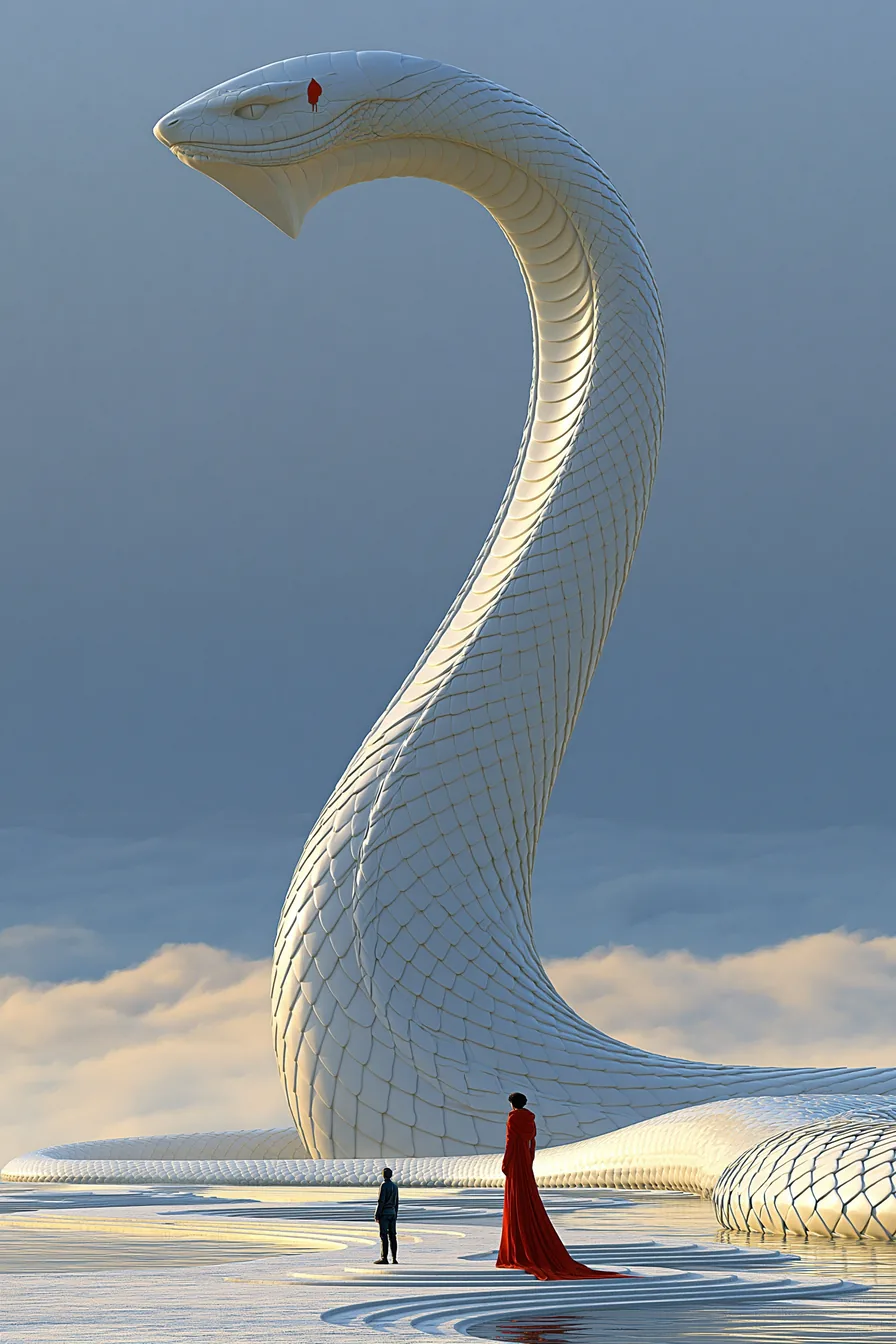
Twelve animals cycle against ten heavenly stems, and the stems move in pairs through the five elements — which makes the real cycle sixty years and gives every animal five distinct forms. The Snake’s five:
Earth Snake (1929, 1989) — the most grounded and the most practical; a Snake whose intuition is aimed squarely at the material world. Metal Snake (1941, 2001) — the most decisive and the most formidable; this is the Snake that acts rather than waits. Water Snake (1953, 2013) — the most intuitive and the most mysterious; the deepest of the five, and the hardest to know. Wood Snake (1965, 2025) — the most creative and the most socially graceful; a Snake that can be charming on purpose. Fire Snake (1977, 2037) — the most intense and the most volatile; the ember running hotter than it should, and the one most likely to say the thing everyone else was keeping back.
The Snake is defined by containment, so the element that modifies it changes what is being contained. A Water Snake and a Fire Snake share a sign and share almost nothing else about how they use it.
Section 07The Year of the Snake
A Snake year returns every twelve years and is read by the tradition as a year of reflection, consolidation and quiet acquisition. It is not considered a year for spectacle. It is considered an excellent year for study, for long-term planning, and for anything that benefits from being done out of sight.
本命年, for a Snake, is the return of its own sign at twelve, twenty-four, thirty-six. The year god 太岁 is understood to be directly overhead, and the conventional remedy is red worn from before the new year — given, always, by an elder rather than bought for oneself.
There is a specific irony in this for the Snake. The Snake’s entire method is self-sufficiency: keep your own counsel, need nothing, reveal nothing. A 本命年 removes that option, because the protection has to be handed over. For one year in twelve the tradition obliges the most private sign in the zodiac to be visibly looked after by somebody else.
The advice the tradition gives a Snake in its own year is the same advice it gives in every year, and it remains the hardest one for this sign to hear. Privacy and concealment are not the same thing. A Snake that keeps its judgment to itself is wise. A Snake that keeps its affection to itself ends up alone with an excellent understanding of everyone who left.