No. 07 · Chinese zodiac Horse · 马 · Wǔ
The Hour of High Noon
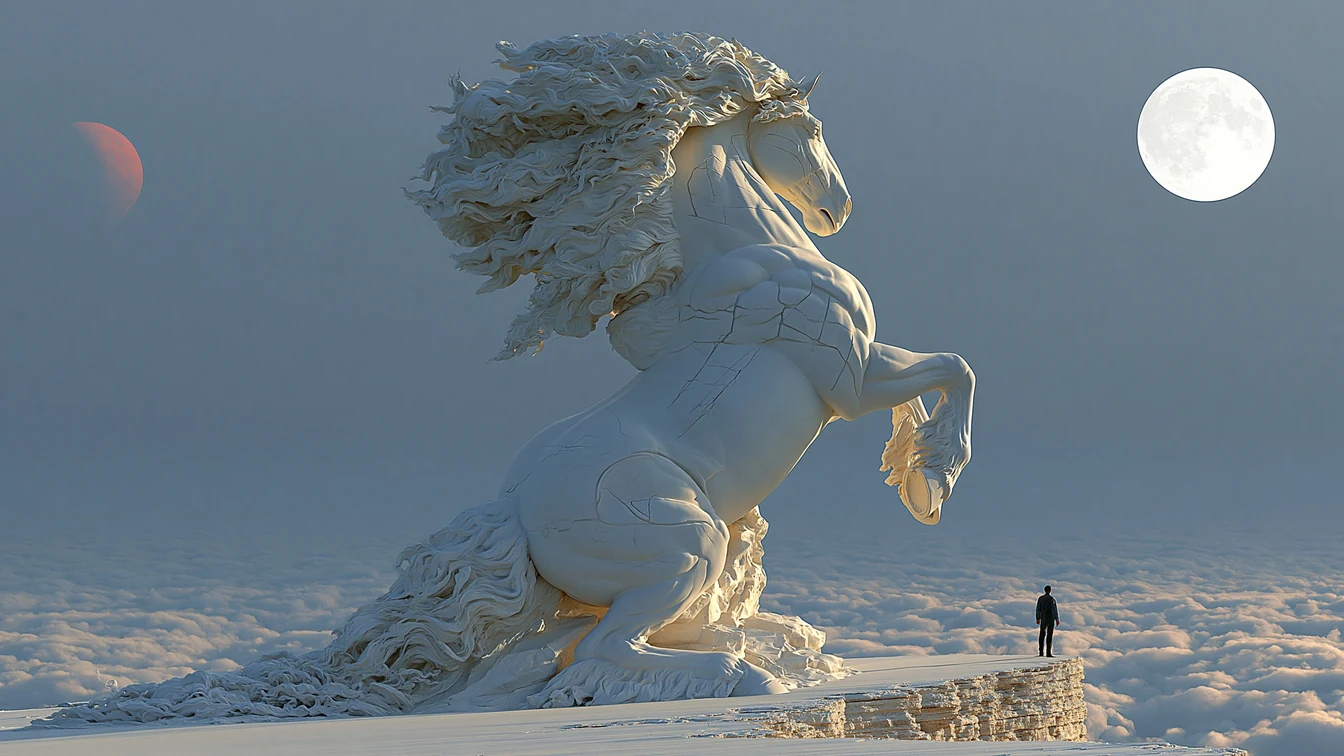
Chinese zodiac Horse (马) — 午时 is the only hour of the Chinese day when nothing casts a long shadow. The Horse owns it: the sign that runs first and explains itself later.
At noon the sun stands directly overhead and the world loses its shadows. Chinese timekeeping called this 午时, eleven to one, the middle of the day and the peak of yang. It is the hottest, brightest, most exposed hour, and it belongs to the Horse — the animal that in Chinese art is almost never shown standing still.
The Specimen
- Earthly branch
- 午 Wǔ
- Hours
- 11:00 – 13:00
- Element
- Yang Fire
- Direction
- South
- Season
- Midsummer
- Zodiac position
- Seventh of twelve
Section 01The Seventh Hour
午时 is the exact centre of the Chinese day, the point from which all the other hours are measured. It is the hour of maximum yang: full light, full heat, full exposure, and — in the traditional reading — the first moment at which the decline toward evening becomes thinkable. The peak and the turn arrive together.
午 is the seventh earthly branch and the middle month of summer. The character itself is a picture: it is the pictograph of a pestle, and by extension of the upright, the centred, the thing that stands at the middle of its own frame. The Horse is placed at the axis of the day, which is a considerable honour and also, if you look at it from the Horse’s point of view, a considerable amount of standing still.
Section 02Yang Fire
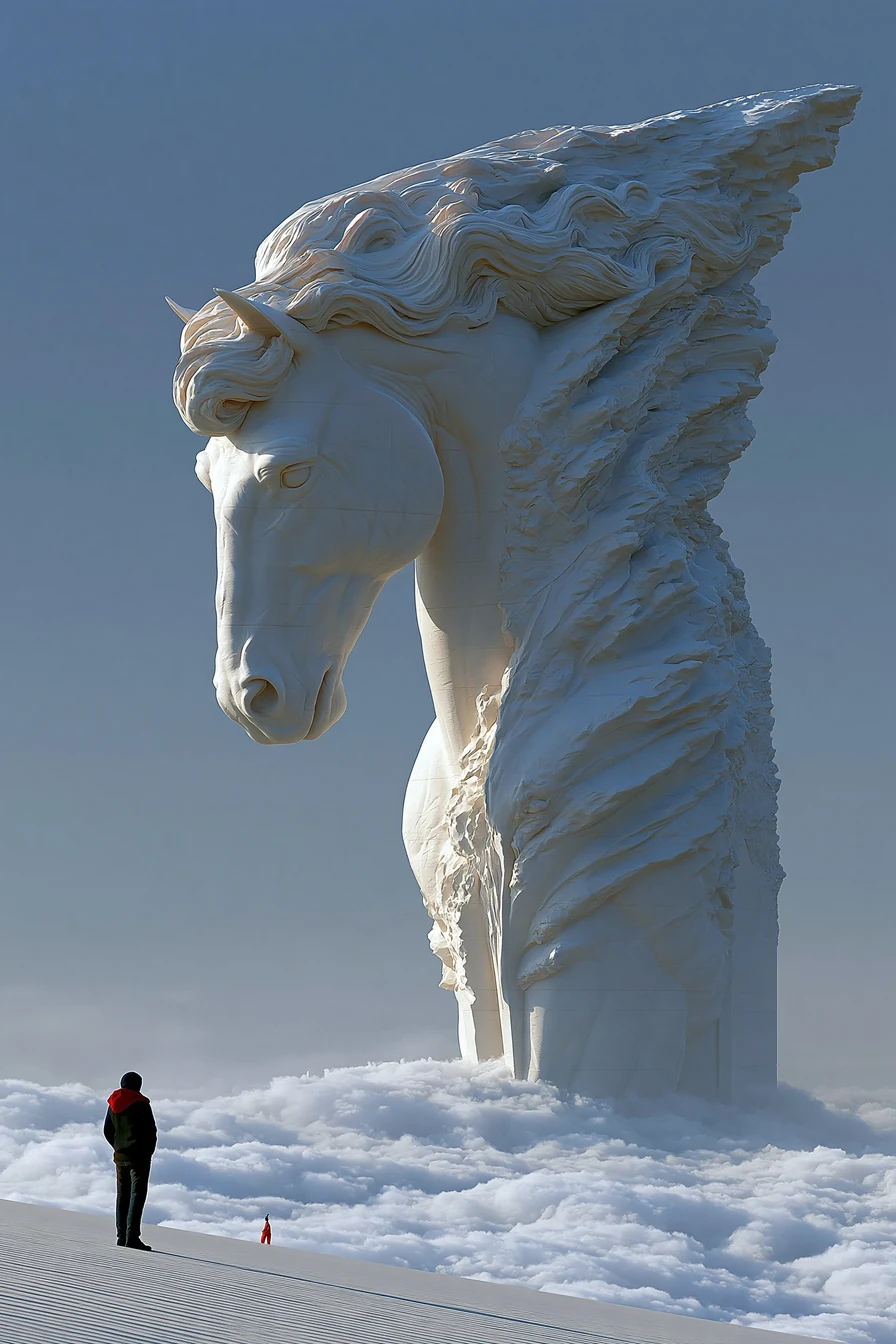
The Horse carries yang fire, and it is the purest expression of the element in the whole zodiac. Fire is the summer phase — expansion, visibility, transformation, the thing that cannot be hidden. Yang fire is fire in its outward, assertive form: the blaze, the signal, the sun at noon.
Horse people are described as energetic, warm, independent and unusually direct. They are the ones who say the thing in the meeting, who volunteer first, who are genuinely liked by almost everyone and genuinely close to almost no one. Horse energy is generous and it is not strategic. A Horse will help you move house and forget to ask for anything in return, and will then be mildly hurt that you did not offer.
The weaknesses are the ones you would expect from a sign made of open fire. Horses are impatient to the point of self-sabotage; they abandon projects at eighty per cent because the last twenty is boring. They are blunt in a way that is not cruel but is frequently experienced as cruelty. And they have a specific and well-documented difficulty with being tied down — not because they are faithless, but because confinement of any kind reads to a Horse as a kind of dying.
Section 03Seventh, and Furious About It
The race story for the Horse is the only one in which the animal is actively cheated, and the tradition tells it with visible relish. The Horse was crossing the river well. It was fast, it was strong, and it was on course for a high finish.
What the Horse did not know was that the Snake had coiled itself around its hoof. Near the far bank the Horse felt something move on its leg, looked down, and reared in shock — and the Snake dropped off, slid ashore, and took sixth place. The Horse came seventh.
There is a small, sharp truth in the placement. The Horse lost a place to an animal it had been carrying without noticing. Every tradition that has ever organised people into types has a version of this warning, but the Chinese one is unusually specific about the mechanism: it is not the strongest thing that beats the Horse. It is the thing the Horse did not think to look at.
The Horse did not lose to something stronger. It lost to something it had been carrying without noticing.
The Twelve · I Ching
Section 04The Horse in the World
The horse in Chinese culture is first of all a military fact. For most of recorded history the northern frontier was decided by cavalry, and the quality of the imperial horse herd was a matter of state security. The famous 汗血马 — the “blood-sweating horses” of Ferghana — were the object of an actual war. Chinese art is full of horses for the same reason European art is full of ships.
The best-known horses in Chinese art are the 昭陵六骏, the Six Steeds of Zhao Mausoleum: six stone reliefs of the warhorses of Emperor Taizong, each one named, each one shown with the arrows that killed it still in its body. They are among the greatest sculptures of the Tang dynasty, and they are a portrait of an emperor’s affection for specific animals.
The Horse is also a symbol of speed, success and social mobility. 马到成功 — “the horse arrives, success follows” — is the standard blessing for a new venture. 龙马精神, “dragon-horse spirit”, is what you wish an older person: the vigour of a dragon and a horse. And the Horse occupies the south in the four-creature scheme, the Vermilion Bird’s direction, the place of summer and of fire.
Section 05Reading the Horse
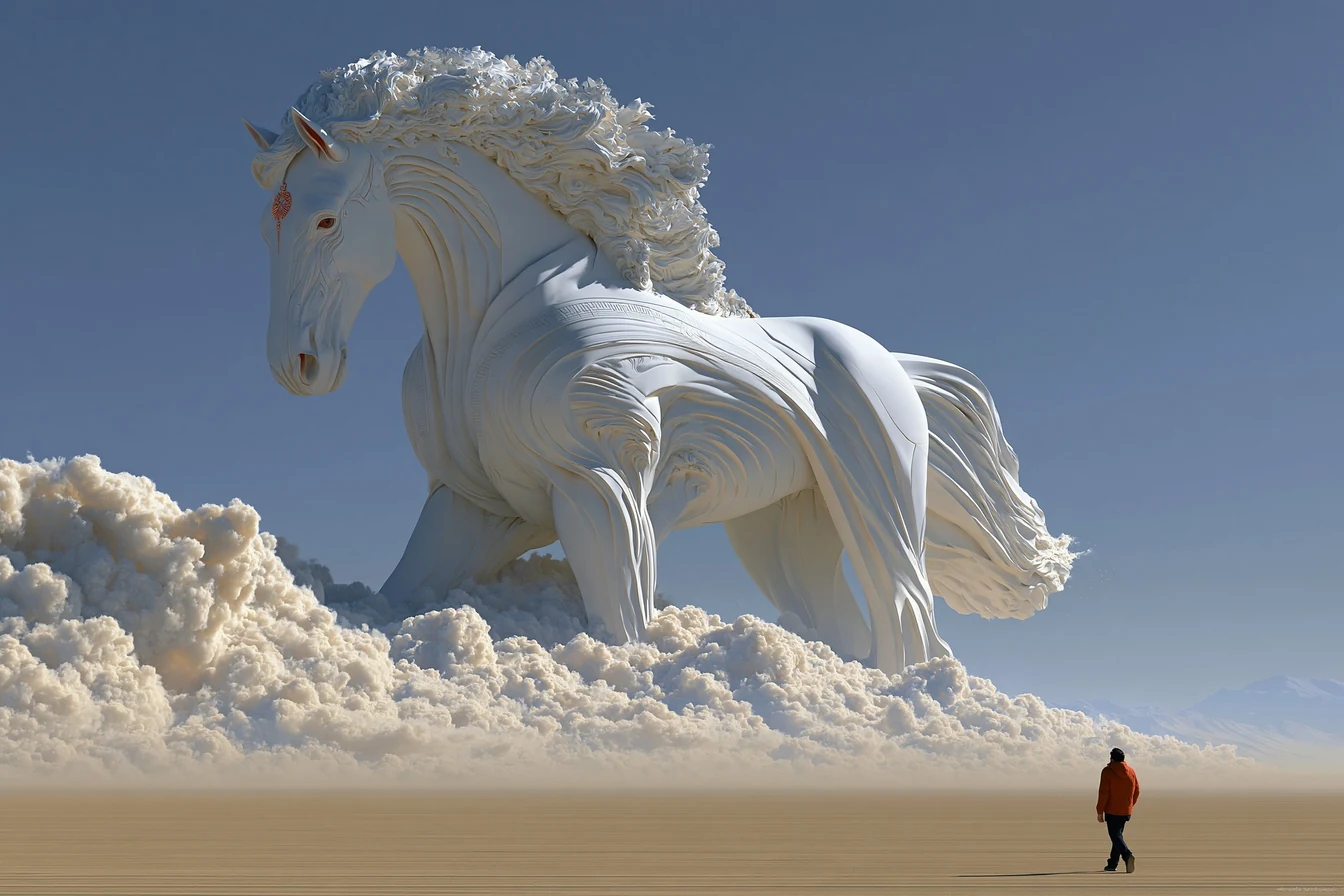
The compatibility tables put the Horse with the Tiger and the Dog — the zodiac’s third triangle, three animals that all run — and the Horse is one of the few signs that is genuinely content in its own group. The difficult pairing is the Rat, whose instinct to keep options in reserve is the exact opposite of everything the Horse is.
The tradition’s advice to the Horse is the least sentimental advice it gives to any sign. Look down occasionally. The Snake is already on your leg. It is not that the Horse should stop running; it is that a Horse which has never once checked what it is carrying will keep arriving seventh, and will keep being surprised.
Section 06The Sixty-Year Round
The twelve animals run against ten heavenly stems, and the stems cycle in pairs through the five elements. The result is a sixty-year round in which each animal appears five times, never twice the same. The Horse’s five forms:
Metal Horse (1930, 1990) — the most disciplined and the most competitive; all of the Horse’s speed with a direction to spend it on. Water Horse (1942, 2002) — the most adaptable and the most emotionally intelligent; a Horse that reads the room before it moves. Wood Horse (1954, 2014) — the most expansive and the most restless; the one that genuinely cannot be kept in a stable. Fire Horse (1966, 2026) — the most extreme of the sixty; a Horse under its own element, which the tradition regards as the single most volatile combination in the cycle. Earth Horse (1978, 2038) — the steadiest and the most dependable; a Horse that finishes the race it entered.
The Fire Horse deserves its reputation. In the traditional reading it is the most powerful and the most difficult year of the sixty, and it is the one combination Chinese families have historically noticed out loud.
Section 07The Year of the Horse
A Horse year returns every twelve years and is read as a year of movement, travel and open competition. The tradition associates it with speed and with exposure — good years for ventures that need to be launched, poor years for anything requiring patience.
本命年, for a Horse, is the return of its own sign at twelve, twenty-four, thirty-six. The year god 太岁 passes overhead and a person born under the same sign is said to feel the movement most directly. The remedy is red, given by an elder before the new year, worn throughout.
The Horse’s difficulty with this custom is obvious and the tradition knows it. A Horse does not like being protected, because being protected implies being contained, and containment is the one thing the sign cannot tolerate. The red belt is a small, annual, non-negotiable reminder that some things are given rather than won.
The advice the tradition gives a Horse in its own year is the advice it gives in every year, and it is the least sentimental counsel in the cycle. Look down occasionally. The Snake is already on your leg. A Horse that has never once checked what it is carrying will keep arriving seventh, and will keep being surprised.