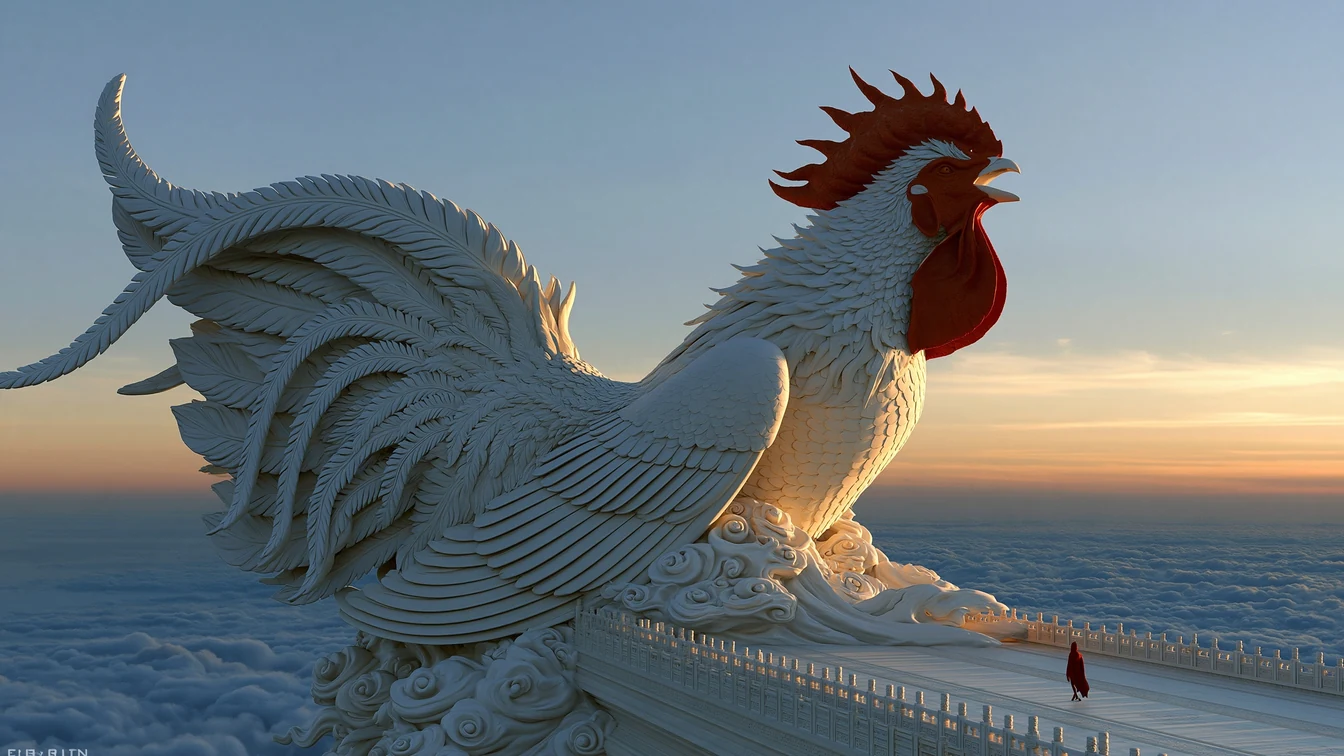
No. 10 · Chinese zodiac Rooster · 鸡 · Yǒu
The Rooster Who Kept Watch
Chinese zodiac Rooster (鸡) — the tenth sign is the only animal in the zodiac that was given its place for telling the truth. The tradition has never quite forgiven it for that either.
酉时 is the hour of sunset — five to seven in the evening, when the light goes gold and then orange and then blue, and the birds begin to settle. In the old villages this was the hour the chickens went up to roost and the lamps were lit, the working day closing over the fields like a lid. The tenth hour belongs to the animal whose whole function in Chinese life was to announce a time.
The Specimen
- Earthly branch
- 酉 Yǒu
- Hours
- 17:00 – 19:00
- Element
- Yin Metal
- Direction
- West
- Season
- Mid-autumn
- Zodiac position
- Tenth of twelve
Section 01The Tenth Hour
酉时 runs from five to seven in the evening and marks the transition from day to night. It is the hour of returning: animals to shelter, workers to the house, light to the interior. In the classical scheme 酉 is the tenth earthly branch and the middle month of autumn — the point at which the harvest is in and the year begins its long decline.
The Rooster’s claim on this hour is the most literal of the twelve. The bird does not merely resemble the hour; it used to be the mechanism by which the hour was known. In a world without clocks, the crowing of a rooster was a public utility. Every household that kept one was keeping a timepiece that also produced eggs.
Section 02Yin Metal
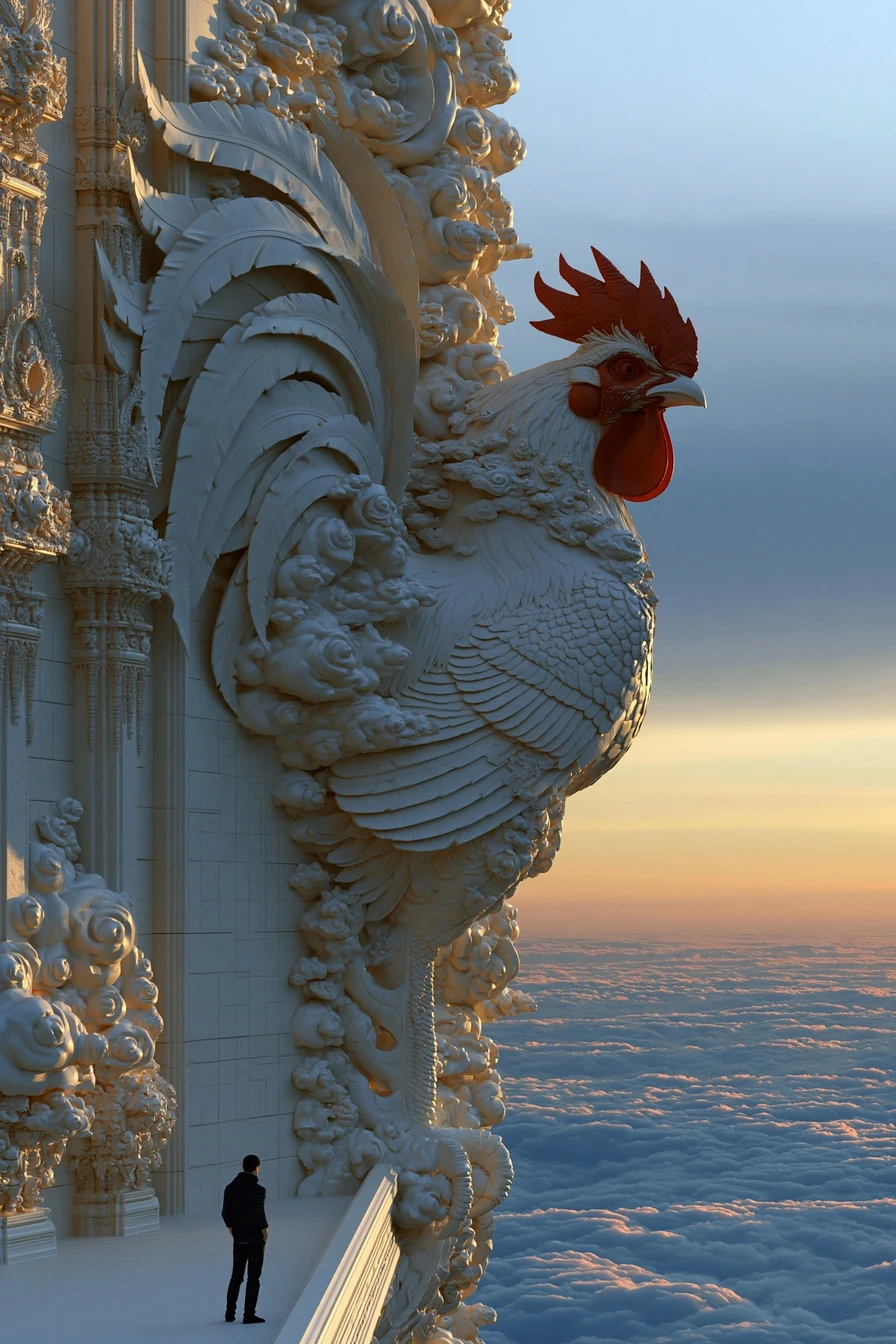
The Rooster carries yin metal, the same element as the Monkey in its receptive form. Where yang metal cuts, yin metal assesses. It is the element of the mirror, the scale, the polished surface — the faculty of seeing exactly what is there.
Rooster people are described as observant, punctual, hardworking and honest to a fault. They notice details other signs do not: the crooked picture, the figure that does not add up, the thing that was said slightly wrong. They are excellent at work that requires accuracy and consistency, and they are the sign most likely to have already done the thing you were about to remind them of.
The tradition is equally clear about the cost. Roosters are critical, and they are not tactful about it. A Rooster will point out the error in public, correctly, and will be genuinely surprised by the reaction. They are also given to a certain vanity — the rooster is a beautiful bird and knows it — and to a preoccupation with how things look that can shade into superficiality.
Section 03Tenth, and Keeping Watch
The Rooster’s race story is short. It crossed the river on the raft the Monkey built, alongside the Goat and the Monkey, and finished tenth — behind the Monkey it had travelled with, which is exactly the sort of detail the tradition enjoys.
The traditional role assigned to the Rooster on that raft is worth noting. It was the one watching the current — calling out what it saw while the Monkey built and the Goat stayed calm. Three animals, three functions: make, watch, hold. It is the most explicit division of labour in the whole cycle, and it gives the Rooster the one job it is best at, which is noticing.
Three animals, three functions: make, watch, hold. It is the most explicit division of labour in the whole cycle.
The Twelve · I Ching
Section 04The Rooster in the World
The rooster’s cultural position in China is unusually double-edged. On the one hand it is a solar symbol of the highest order: the bird whose cry drives away the dark, whose image appears on roof ridges and in processions, whose red comb and upright bearing made it an emblem of vigilance and of official rank. The character 鸡 sounds like 吉 — auspicious — and rooster imagery is standard New Year decoration.
On the other hand the rooster is also a symbol of a certain kind of limited, combative pride. 鸡肠小肚 — “a chicken’s intestines and a small belly” — describes someone petty. 小肚鸡肠, the same idiom rearranged, means narrow-minded. The same bird that announces the dawn is, in the next saying, the bird that cannot see past its own yard.
This double reading is not a contradiction; it is a warning about a specific personality type. The Rooster sees accurately and speaks immediately, and a person who does both of those things will be correct very often and liked rather less often. The tradition has watched this happen for three thousand years and has decided, on balance, that the rooster is worth keeping anyway. The dawn needs announcing. Someone has to do it.
Section 05Reading the Rooster
The compatibility tables pair the Rooster with the Ox and the Snake — the zodiac’s second triangle, three signs that all value precision — and with the Dragon. The difficult pairing is the Rabbit, whose entire method of survival consists of not saying the true thing out loud.
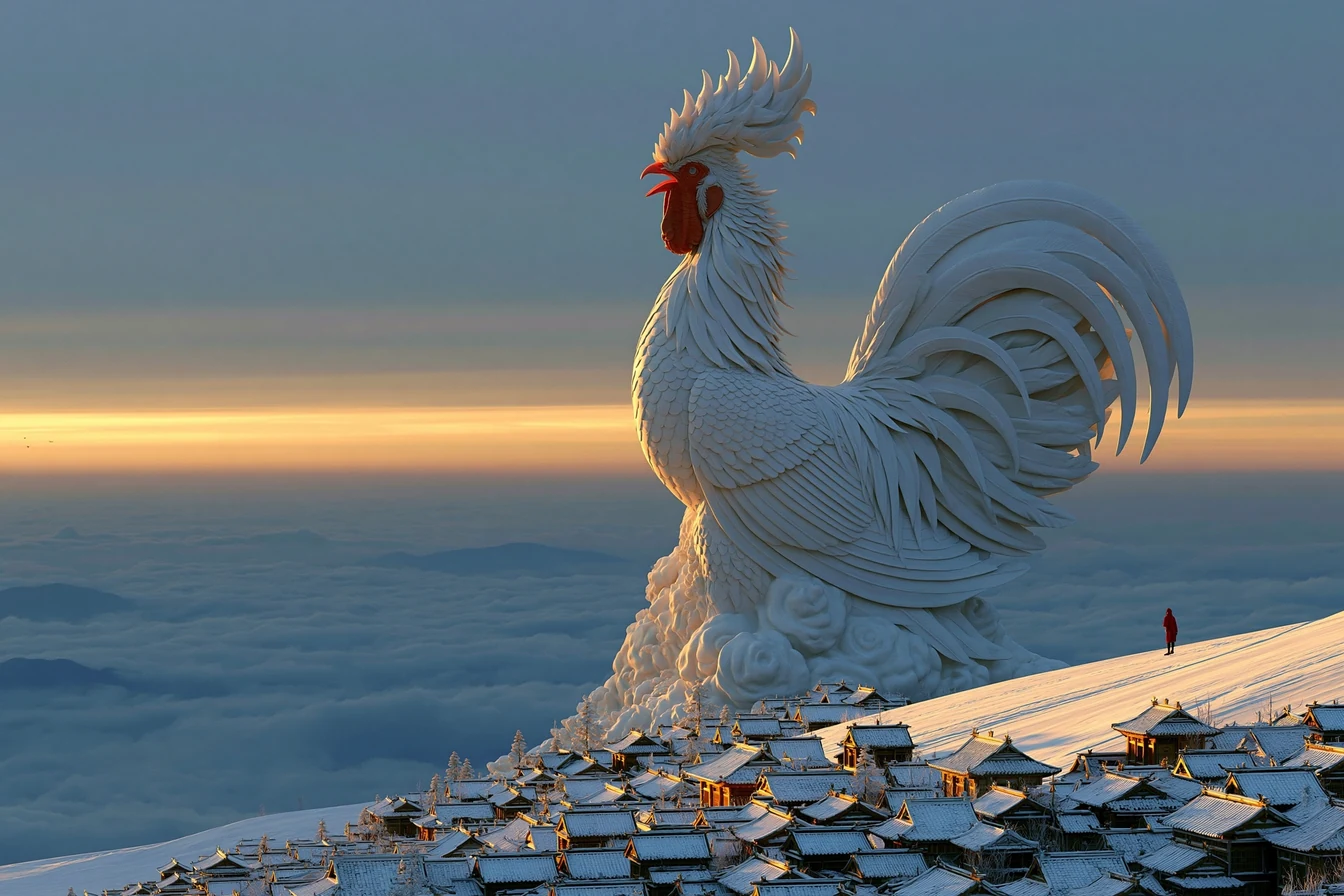
The tradition’s advice to the Rooster is the smallest and most difficult adjustment in the cycle. It is not to stop noticing, and it is not to stop telling the truth. It is to occasionally wait an hour. 酉时 is the hour of sunset: the moment when the day’s work is finished and the light is briefly, perfectly, on everything at once. A Rooster that can watch the sunset without correcting it has learned the whole lesson.
Section 06The Sixty-Year Round
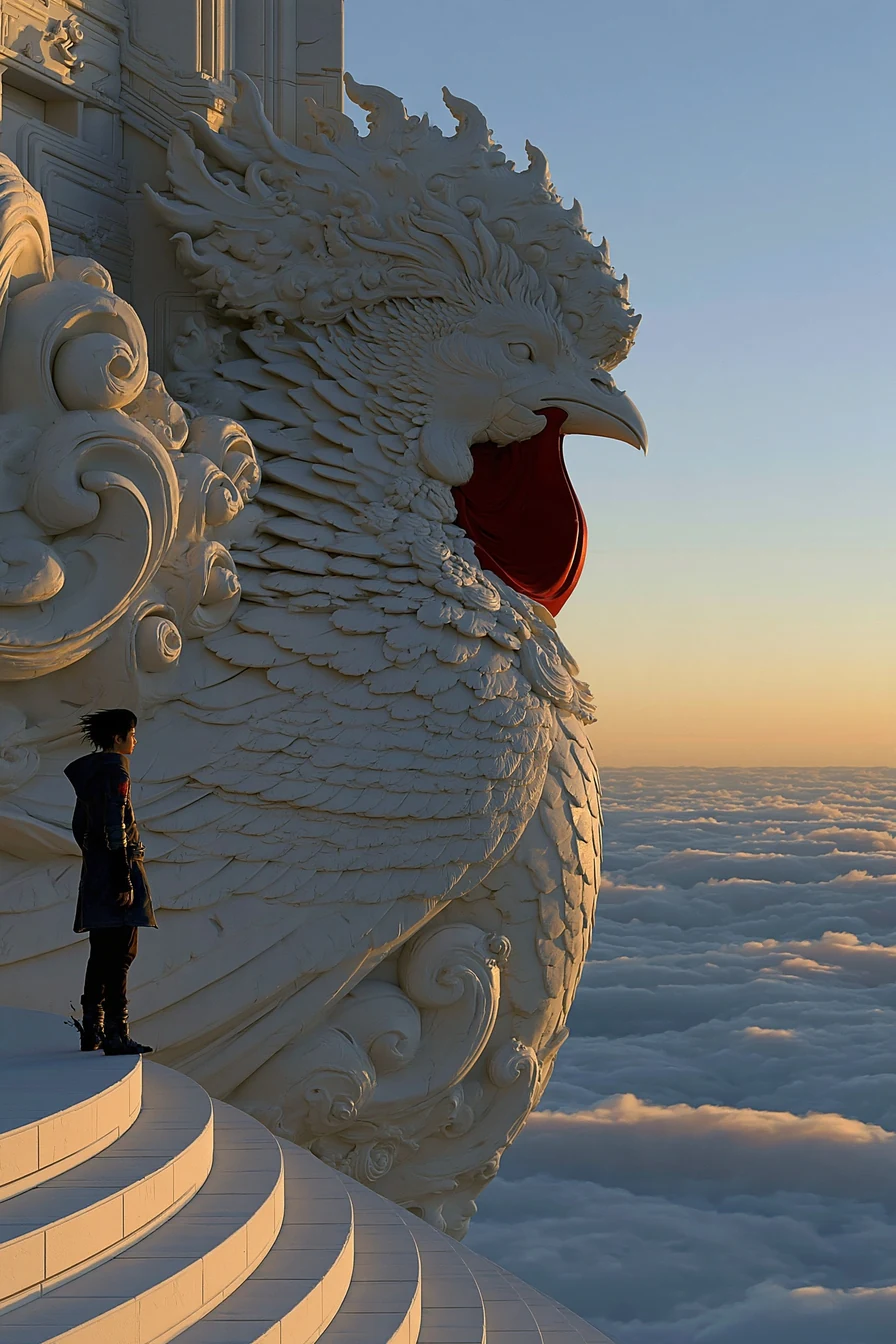
The twelve animals cycle against ten heavenly stems, and the stems move in pairs through the five elements — which makes the full round sixty years and gives every animal five forms. The Rooster’s five:
Water Rooster (1933, 1993) — the most perceptive and the most diplomatic; the one of the five that can see the error and decide not to mention it. Wood Rooster (1945, 2005) — the most imaginative and the most sociable; a Rooster whose eye for detail is aimed at beauty rather than at faults. Fire Rooster (1957, 2017) — the most confident and the most outspoken; the sharpest tongue in the sixty. Earth Rooster (1969, 2029) — the most reliable and the most methodical; the Rooster that runs the schedule everyone else depends on. Metal Rooster (1981, 2041) — the purest expression of the sign: exact, hardworking, honest, and completely uninterested in whether you enjoyed being corrected.
Because the Rooster is already the sign of accuracy, the element decides what the accuracy is for. A Wood Rooster notices that a thing is beautiful. A Metal Rooster notices that it is wrong.
Section 07The Year of the Rooster
A Rooster year returns every twelve years and the tradition reads it as a year of diligence and plain dealing — a good year for work, for accounting, for putting things in order, and a poor year for anything that depends on charm.
本命年, for a Rooster, is the return of its own sign at twelve, twenty-four, thirty-six. The year god 太岁 is understood to be directly overhead, and the conventional protection is red, worn from before the new year and given by an elder.
The Rooster’s relationship to this custom is the most straightforward of the twelve. The Rooster is the sign that keeps the schedule, announces the hour and notices what is out of place, and a fixed annual obligation with a clear rule is not a burden to a Rooster — it is a pleasure. The belt is worn on time, in the correct colour, and replaced when it wears out.
The advice the tradition gives a Rooster in its own year is the smallest and most difficult adjustment in the cycle, and it is not to stop telling the truth. It is to occasionally wait an hour. 酉时 is the hour of sunset — the moment the day’s work is finished and the light is briefly perfect on everything at once. A Rooster that can watch the sunset without correcting it has learned the whole lesson.